I spent many years chasing the "corporate dream" before falling back to my original love - writing. Now a freelance writer and novelist, I spend my days plotting fictional lives with my keyboard and writing for online publications. If you would like to have your business featured in an article, have a question or comment, or simply want to say hello, please feel free to contact me at Author@KawaiiTimes.com. As an Amazon Associate I earn from qualifying purchases.
If you’ve played any of the Ticket to Ride games during family game night, you may have found that small children gravitate to the gaming table when the trains come out. That’s how it is at our house, with young railroad barons itching to play.
As simple as the original Ticket to Ride is to play, it’s still a little bit beyond the reach of kids who aren’t quite able to read maps and keep the small train cars in a line on the map.
Ticket to Ride: First Journey solves almost every problem that our six-year-old has playing the standard game (and expansions). The rules are somehow made even more simple, the train cars are larger and easier to manage, and the destination cities have colorful pictures that are easy to see both on the board and on the route cards. Days of Wonder have managed to do all of that while retaining the fun of game play.
Although I’m not really into model railroading like Papa and Robby are, Ticket to Ride has been one of my favorite game franchises. I love the variety of maps, the strategy, and the cutthroat deviousness that being a railroad baron brings.
When we found the First Journey version of the game, it was a no-brainer. We had to have it! Now, we can set up young gamers with this fun game and they can battle it out at the kid’s table while we play an adult game of Ticket to Ride Europe.
My only complaint is that the instructions remind kids to keep their cards to themselves, but as anyone who plays games with kids knows, it can be really difficult for small hands to manage more than a few cards at a time. We implemented a house rule that players under age 10 can lay their cards on the table in front of them, face up. Although this makes it easier for other players to cut someone’s route off, it’s the only way our kiddo was able to keep track of his colored railroad car game cards and routes.
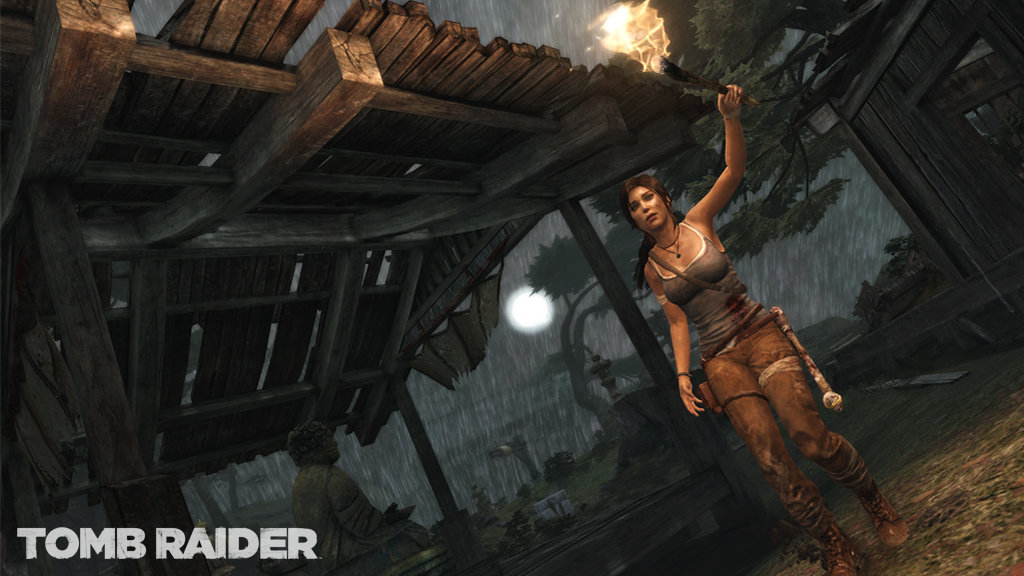
I’m behind the times when it comes to gaming. It doesn’t matter whether it’s console or PC, I’m typically playing games that came out years ago. So, it wasn’t until recently that I finally got around to playing Tomb Raider even though it came out back in 2013. One thing’s for sure: I don’t know why I waited so long to play this amazing game!
If you aren’t familiar with Tomb Raider, it’s a single player puzzle solving game that follows Lara Croft and her crew as they embark on her first quest to not only find artifacts, but also to solve the mystery surrounding a lost island.
I played Tomb Raider on my Dell Inspiron 15 5000 through Steam, and after years of having a laggy desktop that chugged along through games like Little Nightmares, it was awesome to have the laptop upgrade so I could dive into Tomb Raider and actually enjoy the dark, visual storytelling.
While I’ve always loved the puzzle platforming style of classic Lara Croft games, Tomb Raider brings her story to the next level by incorporating survival style play, hand to hand combat, and such rich graphics that I felt like I was trapped on the island with Lara.
Here’s one of Tomb Raider’s trailers. Please be aware, this trailer was not made for kids. Quick, put on your headphones and turn your laptop so they can’t see!
Some players who have loved the series since the first game released in 1996 were unhappy with Tomb Raider for not being true to earlier games in form and function. I was delighted that it wasn’t purely a puzzle solving game. The added mechanics, multi-layered world, and multi-character storytelling were an incredible upgrade for me.
My only gripe with the game was that there were so many side quests spread over the massive map. I got tired of trying to find all of the hidden bonus items, especially on multi-level maps where not only was there a lot of ground to cover, but mountainside heights as well. In the end, I decided to enjoy the main story and forgo hunting for GPS markers, journals and the like as completing those side bits ended up detracting from getting to the next quest.
If you want to fight bad guys, solve puzzles, and watch a cinematic story unfold before your eyes, and you’ve got the energy to get some gaming in after the kids go to bed, then this game will be right up your alley.
I’m looking forward to playing the next game in the Tomb Raider line. Shadow of the Tomb Raider looks just as dangerously appealing as the 2013 Tomb Raider was.
One other thing to be aware of, if you’re one of those rare PC gamers who wants a console experience, at the time of this writing the Steam Link is still available on Amazon.
Dad plays a ton of the games in his Steam library using the Steam Link and a controller, and it’s been an awesome crossover device for him. Get yours here!One other thing to be aware of, if you’re one of those rare PC gamers who wants a console experience, at the time of this writing the Steam Link is still available on Amazon. Dad plays a ton of the games in his Steam library using the Steam Link and a controller, and it’s been an awesome crossover device for him. Get yours here!
Want to see more? Check out some of our other articles and reviews below.
With Games Workshop’s release of the Warhammer
Age of Sigmar: Soul Wars starter set came a new chamber for the Stormcast
Eternals, the Sacrosanct Chamber. This
sect of the Stormcast Eternals focuses on magical weaponry, enhancements and
beefy spellcasting.
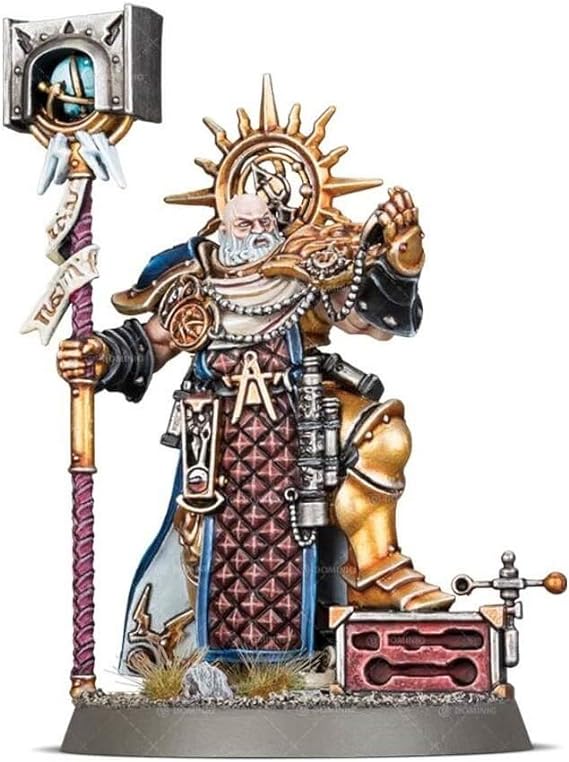
Evocators are equipped with Tempest Blades and Stormstaves and get a whopping four attacks. They hit & wound on a three plus, with minus one rending and one damage each.
The leader of the unit, the Evocator-Prime gets an additional attack with his Tempest Blade and Stormstave. If it’s not obvious from the attack profile of their weapons, this is nuts. Even a small unit of three Evocator models is throwing thirteen dice when attacking, with a 66% (3+) chance of successful hits and then wounds on the dice.
On top of that amazing melee attack profile, Evocators have an ability called Celestial Lightning Arc that allows them to reroll saves of a one against shooting attacks. Not only that, after resolving their crazy number of attacks per game model in the combat phase, the Celestial Lightning Arc ability allows you to pick one enemy unit within three inches of the Evocators and roll two dice for each model in that unit. On a roll of a four plus on those dice, the unit suffers mortal wounds.
Celestial Lightning Ark can decimate big blobs of one-wound infantry, giving you two dice to roll for each model, and a 50% (4+) chance of success. This almost guarantees that you can finish off or at least cripple almost any group of infantry after one round of combat. You can equip them with Grandstaves instead, sacrificing one attack and rending, in exchange for doing two damage per hit. Evocators are very hardy with three wounds each, and a standard four plus save.
If that’s not enough to get you excited about Evocators, the unit also counts as a Wizard as long as it has at least two models left. Evocators are restricted to only casting one spell a turn, and unbinding one enemy spell a turn, with the only spell they can cast being Empower.
And what a spell Empower is. Empower literally does what it says, and if successful, empower’s another Sacrosanct or Redeemer Chamber unit with a reroll for all of their failed wound rolls. This spell makes pairing a unit of Evocators with a unit of Sequitors a no brainer.
The Sequitor’s Aetheric Channeling ability, if used to empower their weapons, lets them reroll all failed hit rolls. Being able to reroll all failed hit and wound rolls when attacking maximizes the Sequitor’s damage output in close combat. So, it’s always a good idea to backup a unit of Sequitor’s with at least a minimum unit of three Evocators.
Evocators are another somewhat overpowered unit that are new to the Stormcast Eternals, but their awesomeness is reliant on being able to cast a successful spell. This is something that’s more difficult in the 2nd Edition of Age of Sigmar, with the increase in spell unbinding range. They are wonderfully sculpted and very cool models available in either the Warhammer Age of Sigmar: Soul Wars starter set in a unit of three or in their own box in a unit of five.
I absolutely love this unit of Warhammer miniatures, and if you take the time to learn how to use them with your army, I know you’ll enjoy putting them down on the gaming table, too.
Want more? Check out some of our other lists and reviews below.
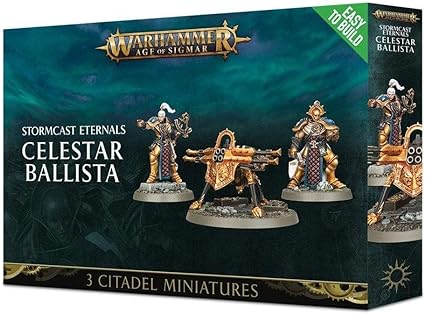
The Celestar Ballista adds a versatile artillery piece to armies of Stormcast Eternals. The Celestar Ballista was released in the Warhammer Age of Sigmar: Soul Wars box and in a separate easy to build kit.
The separate kit has its own unique sculpts for the Sacristan Engineers that crew the machine, and a different front armored plate of the ballista. This makes for some decent variety when picking up multiples of the Celestar Ballista for your shooty lists.
The Celestar Ballista models have two modes of fire with the Versatile Weapon ability. You decide which to use before firing in the shooting phase. Single shot has a range of a whopping thirty-six inches, with one attack hitting and wounding on a three plus, with minus two rending and one damage. This miniature model is perfect for sniping some wounds on an enemy hero unit out of reach of your battle line units.
The rapid fire mode is where I feel the Celestar Ballista really shines. Getting four attacks and hitting on a five plus, instead of the three plus Single Shot gets you. No matter which firing mode you choose, any time an attack hits, it explodes into d6 hits on the target because of the units ability, Chained Lightning.
In single shot mode you have a small chance to do six hits, and in Rapid Fire mode that increases to a potential twenty four wounds being dealt!
Obviously, the stars and dice rolls have to align perfectly for that to happen, especially with the harder to hit rolls, but you can still hope to average a few wounds every time you pull the trigger in rapid fire mode if the dice are with you. (If you feel like the dice you’re rolling are “unlucky”, check out the bag of 40 dice from Wiz Dice below. We like to have a few sets on hand just in case.)
The Sacristan Engineers crewing the Celestar Ballista have to stay within one inch of it when moving, and defend it in close combat with their Sigmarite Blades. If you have the Celestar Ballista in a piece of terrain cover, it gets plus two to its save of a four plus because of their Bastions of Death ability.
Celestar Ballistas are a must buy for any Stormcast Eternals or Order faction player in games of Warhammer Age of Sigmar. Costing only one hundred points when building a list, it’s easy to fit one or two into your miniature game army, and they are definitely worth the points cost. The Celestar Ballista pairs up well with the Lord-Ordinator as he adds one to all hit rolls made by any Order War Machines like the Celestar Ballista within nine inches of him.
Building models has always been a great choice for a hobby. It’s relaxing, fun, builds fine motor skills and gives you full control over how you pose or build your models. Whether you build muscle cars, airplanes, tanks, or full armies of fifteen or twenty-eight millimeter models for tabletop wargames, you’ll need a core set of tools in your toolkit to be able to build them properly.
For me, miniature modeling is my meditation and therapy. It’s my time to recharge after a stressful day, or simply have fun creating something. I gravitate towards twenty-eight millimeter figures since I play Warhammer Age of Sigmar by Games Workshop. But whether you are new to miniature modeling, or you’re looking to round out your modeling toolkit, this list should give you a starting point no matter what kind of modeling project you’re tackling. In no particular order, here are my top 10 tools of the trade for building and customizing plastic, resin or metal model kits.
Clippers
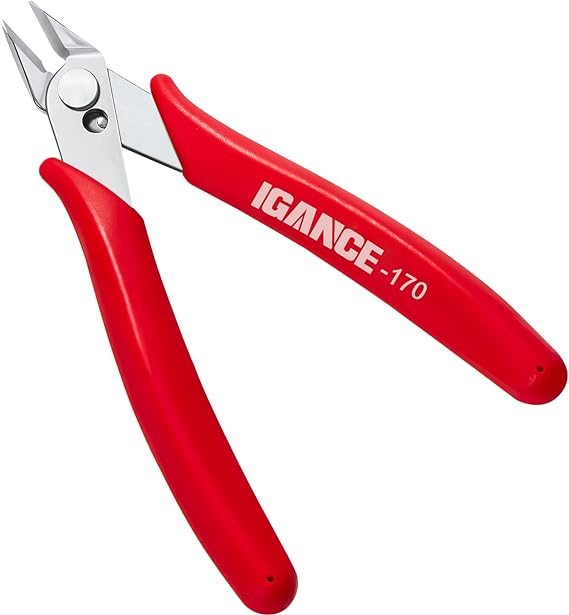
Building plastic model kits starts with clipping parts of the model off of the plastic sprues. The sprue is the frame that holds all of the parts together after it comes out of the molding machine. You’ll need a good set of clippers to cleanly cut the parts off the larger parts of the sprue. I use the IGAN-170 Flush Wire Cutters. They make clean cuts and have thin cutting tips to get into those hard to reach places. Because they are capable of cutting metal, they can be used for metal and resin kits as well as providing a very clean cut on plastic.
Hobby Knife & Extra Blades
After cutting out your parts, you’ll need to clean up any leftover mold lines and bits of sprue on each peace. A good hobby knife that uses number eleven (#11) blades is a must-have when building any model kit. You can use the sharp side of the hobby knife for cutting and trimming parts, and you can use the back side of the blade at a ninety degree angle to scrape off mold lines. I use the Excel Blades Soft Grip K18 Hobby Knife because you tighten the blade down on the back side of the knife and it prevents the blade from getting loose during use, which is an issue with cheaper hobby knives.
I highly recommend picking up at least a one hundred (100) count pack of extra number eleven blades so you can always be using a fresh and sharp blade. Dull blades can cause the knife to slip and instead of cutting the plastic you can end up cutting yourself. I change to a new blade after every few model kits, depending on their size, as a safety precaution.
Pin Vise
A Pin Vise is a precision tool for drilling small holes. Pin Vises are necessary to drill out the end of weapon barrels as they are often filled in on a lot of model sculpts and adding small magnets to models for swapping weapons. Pin Vises are also essential when building metal models, as the joints often need to be pinned as well as super glued for strength.
Pinning is a modeling technique where you drill small holes into the mating surface of two parts and glue in a small section of stiff wire or paperclip when attaching the parts together. This reinforces the model in the same way that rebar bolsters concrete.
Pin Vises normally come with a set of tiny metric drill bits, but I recommend picking up a small set of standard (SAE) drill bits as well, because most pin vises can hold up to a one eighth inch drill bit and one eighth inch is a good size for most magnetization needs. I use an older Citadel pin vise that is no longer available, but for more up-to-date kits, I recommend the CML Supply Mini Micro Drill Bit Set and Pin Vise. The set comes with a thirty piece set of micro drill bits in a range of sizes.
Work Holder for Small Models
For painting individual miniatures or parts of all scales, it is useful to have something to hold the miniature after you’ve built it to get it primed. Work holders or painting handles can be made of just about anything. Old pill bottles, small jars, or wooden craft block are all useful as a work holder with the addition of some sticky tack on top to hold the mini or part.
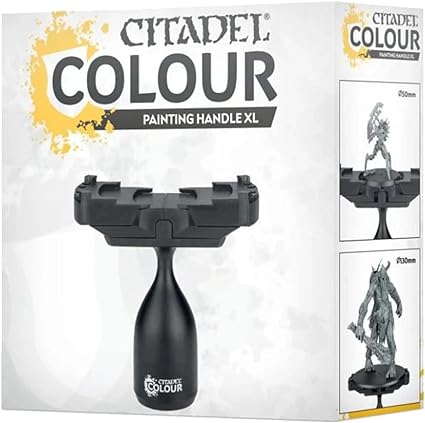
Games Workshop also has an official Warhammer 40K Citadel Painting Handle with a spring loaded top made for holding primarily twenty eight millimeter miniature bases. I have one in addition to my home made painting handles, and it works awesome with enough weight in the base to hold even full metal minis without the handle falling over when you set it on the table.
I mainly use it for single hero figures that I spend more time painting on and it works great. Games Workshop also has two other versions of their painting handle, the XL is for holding larger based models than the standard size can hold and the Assembly Stand that has two soft hold clips for holding delicate parts while gluing a hard to work with miniature.
Tweezers/Pliers
A good set of tweezers and a set of pliers are essentials for your toolkit. Some model parts are very small and hard to hold while gluing pieces in place. Tweezers assist well here, as well as with adding rocks and plants to your bases after painting. I suggest you grab a set of Tweezer Guru Precision Tweezers as they are high quality without being too expensive.
Pliers are a necessity for pinning models as they are needed to straighten out lengths of wire or paper clip and then cutting them to length. I like to use a set with a ninety degree angle on the jaws such as the Ion Tool 7” Angled Needle Nose Pliers as it makes it easier to shape your pinning material as well as removing temporary pins. ProTip: Never use your pliers directly on plastic parts as they will quickly ruin detail.
Plastic Glue
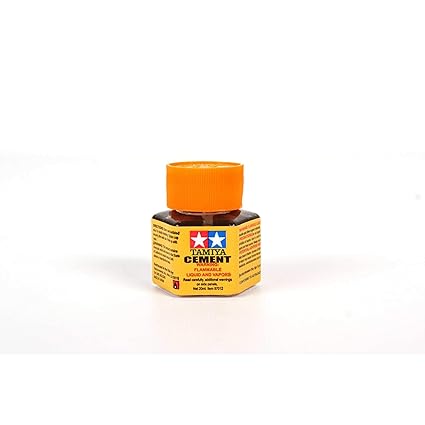
A good plastic glue is necessary to build any plastic model or miniature. There are several options available from all of the major brands like Plastruct, Tamiya, and Citadel. Plastic glue actually melts the plastic where it is applied and when two parts are glued together this way a permanent bond is created as the plastic from the two parts melts together and then dries. Plastic glue also comes in several thicknesses. I personally prefer the Tamiya glues as they have a nice brush in the cap for precision application. I use the Extra Thin consistency for most of my model building needs, and medium consistency Plastic Cement for more gap filling action between parts.
Super Glue/Super Glue Accelerator
Plastic glue is great for plastic models, but if you are building in resin or metal, super glue is the right adhesive for the job. I have found most plastic minis don’t adhere well to their bases with plastic glue, so I attach all of my minis to their bases with super glue.
Super glue is useful for adding rocks, plants, cork, etc to your bases. Virtually any super glue will work for building models, and cheap super glue is readily available at any hardware or dollar store. For me though, I’m one of 5% of the population that is extremely allergic to super glue (you can read more about what to do if you have a glue allergy here), so use I use Super-Gold+ Odorless superglue that doesn’t off gas the substance I’m allergic to.
A proper super glue accelerator like Insta-Set does what it says and instantly sets and dries any super glue it comes in contact with. I find this to be essential when attaching built models to bases as it’s inconvenient and sometimes impossible to hold the model to the base in position until the glue dries.
White Glue
You might be surprised to find that standard white glue used in kid’s craft projects is a useful adhesive to keep on hand. Elmer’s is the most common brand here in the USA and is the one I use. White craft glue is useful for gluing grass flocking or dirt/rock mixes to bases. It can be thinned down with water in a one to one ratio to allow it flow down and through thick coverings of these materials. The white color allows you to easily see where the glue is being applied, and it dries clear and takes primer and acrylic paints well if needed.
Green Stuff
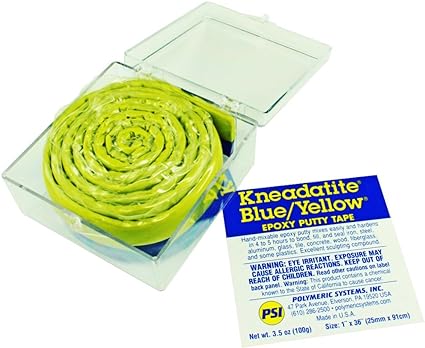
“Green Stuff” is a universal two part modeling putty material with a long working time and a twenty-four hour full set time. Green stuff can be worked by clay carving tools or molds to fill gaps, or to create unique custom parts for your miniatures. This one material can expand your ability to be creative when building models by allowing you to easily customize pieces to your own liking or for special purposes.
Add a cheap set of clay molding tools like this eleven piece set from eBoot and you’ll be making custom parts in no time.
Games Workshop also makes a product called Liquid Green Stuff although not everyone likes it. For me, I find that it is useful as a gap filling material as well as giving you the ability to add texture to flat surfaces.
No matter which version of Green Stuff modeling putty you use, once dry, green stuff can be easily sanded and primed for painting.
Sanding Sticks
Once your model is built, and your green stuff is dry, you may need to cleanup some minor flashing or sand down your modeling putty into the proper shape. Sanding sticks like these twenty packs from DuraSand are cheap and come in many different grits and can be further cut to any length. Essentially, they’re a more flexible emery board like those used by nail salons. Sanding sticks are able to get into those hard to reach places and their flexibility means you can bend them around curves of different radii with ease. I keep a little cup on my hobby table full of sanding sticks ready to go when building models or using green stuff.
I hope these recommendations help you to get started building your go-to toolkit for modeling. The more you model, the more creative you’ll get with finding tools to keep your creativity going. No matter if you’re just starting out, or you’re a modeling professional, having the right tools for the job makes all the difference.
Want to see more? Check out some of our other articles and reviews below.
Amazon Product Name (APN): Citadel Easy-To-Build Castigators with Gryph Hound Warhammer
Manufacturer: Games Workshop
Review by: Kelly
Our Rating: 4 of 5 stars
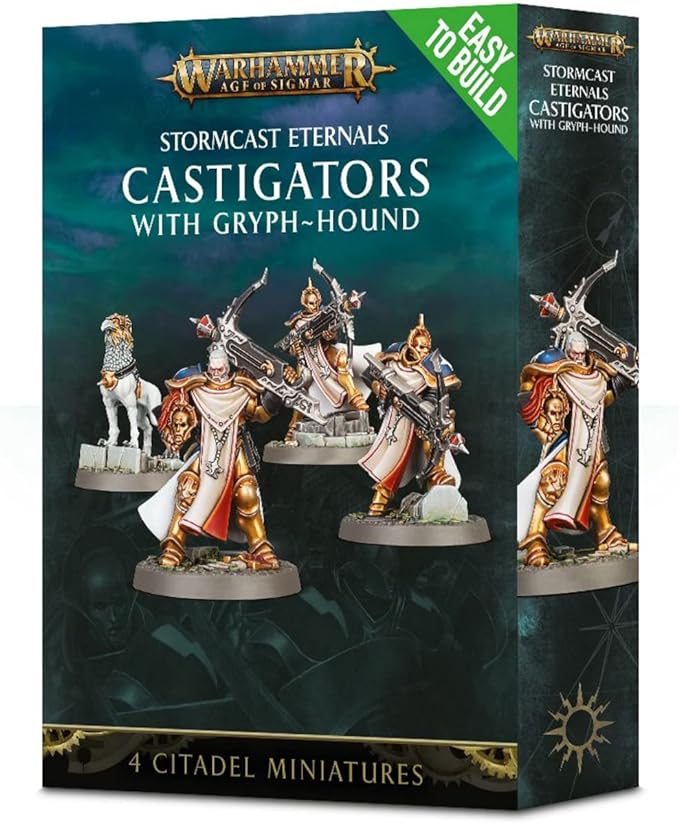
Castigators are a new ranged infantry unit for the Stormcast Eternals in games of Warhammer Age of Sigmar. Added with the release of the Warhammer Age of Sigmar: Soul Wars box in a unit of five, Castigators are the heavy hitting ranged trooper of the Stormcast Eternal Sacrosanct chamber. Castigators are also available in the Tempest of Souls and Storm Strike bundles along with a seperate easy to build box that builds three Castigators including both male and female models and a single gryph-hound with a new sculpt unique to this box.
Castigators are armed with Thunderhead Greatbows with an eighteen inch range, one attack each hitting and wounding on a three plus with minus one rending and one damage each. Very similar to the Judicators Skybolt Bows, with their bows getting a twenty-four inch range instead. The leader of the unit is a Castigator-Prime and that model gets plus one to hit with its greatbow. That’s about where the similarities with judicators end though.
Castigators have an ability called Burst of Celestial Energy that allows hits with the Thunderhead Greatbows of a six to inflict D3 hits instead of one if the target is a Daemon or Nighthaunt unit. This ability makes them a must include when fighting either of those forces Judicators.
Castigators also have Aetheric Channeling, similar to Sequitors, that allows the unit to either reroll hit rolls of a one or increase their rending from minus one to minus two. They’re a great ranged option for your Stormcast Eternals army with great model diversity in beautiful and detailed sculpts.
Male and Female models are in the units, and some have their helmets removed which gives some great visual variation when they’re set out on the table.
The only real issue is their availability. Games Workshop really needs to release a ten model box of Castigators to make it easier to build up their units as there are only five in the starter set and three in the easy to build box. People who want to build shooting armies of Stormcast Eternals will find it difficult to build up more than a small unit without having a bunch of duplicate models. If all you want are the Castigators, buying a bundle box or a starter set just isn’t cost effective.
I hope Games Workshop will release a full unit kit for Castigators like the have for all the other ground troops for the Stormcast Eternals. Either way, check out Castigators yourself for your games of Warhammer Age of Sigmar.
Want more? Check out some of our other lists and reviews below.
Tsuro by Calliope Games is a wonderfully delightful tile laying game for two to eight players, easy to play for ages eight and up. In Tsuro, you are an ancient dragon flying a path through the skies. The tiles have twisting lines representing these paths, and you lay them down one at a time to move your dragon through the skies.
The tiles can be placed in any orientation, but must be put down in the path of your dragon. If your path takes you off the board or runs you into another dragon, you are eliminated. Players take turns laying tiles, moving the dragons until all tiles have been placed or only one dragon remains on the board.
Tsuro is very fun, easy to learn, and quick to play even with a full eight players sitting around the gaming table. Its attractive Asian theme is beautiful and consistent throughout the box and game pieces.
As easy as the board game is to play, there is ample opportunity for strategy as well. It pays to be careful reviewing the tiles in your hand, choosing the one that will keep you alive while eliminating another player.
Another strategy is to isolate your dragon in one section of the board, doing your best to stay away from other player’s tile influence in hopes that you can survive longer than anyone else. This strategy has obvious diminishing returns with a higher number of players in the game. But, there is still room for the gaming group to experience high level play if everyone chooses to be competitive and cutthroat.
Tsuro is a staple of our family game night and travels with us on camping trips, along with other great portable games like Qwirkle and Zombie Dice. In fact, we love Tsuro so much that it made it on our Top 10 Board Games list, which you can read here.
Calliope also makes another version of Tsuro called Tsuro of the Seas (pictured below) where you are a ship captain sailing the seas, avoiding the dangers the lurk both above and below the waves. Both games make great inclusions to your gaming collection. If you want to add Tsuro to your family game night, look for it on Amazon here.
Want more? Check out some of our other lists and reviews below.
Star Fluxx is our favorite scifi themed version of the popular game Fluxx by Looney Labs.
Looney Labs has been producing Fluxx for several years now, and as of the time of this writing, there are over ten different versions of the game in print. Actually, they’ve been making Fluxx so long, there are an additional seven versions now out of print (Mom’s favorite: Eco Fluxx is one of them).
Looney Labs has found the formula for a crazy card game with massive humor, charm, and in the case of Star Fluxx, tons of our favorite scifi references. No matter which version of Fluxx you play, you’ll be getting into a fun, easy to learn, but hard to master card game.
Fluxx is a card game where the rules and win conditions are constantly in flux. Games of Star Fluxx can last anywhere from a few minutes to an hour or more depending on how many people are playing and what cards get drawn. When the basic rules are set, every player is dealt three cards and they draw one card and play one card on each turn. But chances are, those rules won’t last long. This fast paced card game shines when the rules start changing.
Suddenly, you are drawing five cards a turn, playing your entire hand and completely changing the goal every turn. Or you’re drawing one card and have to play three. Or you’re changing hands. Or you’re discarding everything and starting over.
No two games of Star Fluxx are the same, and play continues until someone is able to meet the conditions of the current goal. Oftentimes a player who everyone thought was lagging behind will win, suddenly leaving everyone asking “How did that happen?” and it always leads to us playing again.
Star Fluxx by Looney Labs is one of our favorite inclusions on family game nights, and is especially easy for traveling. It’s appropriate for ages eight and up, although younger children who can read an understand instructions on the fly are able to play, too.
Qwirkle by MindWare is an easy to learn and accessible color and shape based tile laying game for ages six plus, and all levels of gamers.
Qwirkle’s rules are simple: shuffle 108 wooden tiles into a bag, and every player draws six of them. The player who goes first is the one who can place the longest line of tiles of either matching shapes or colors. The next players add onto the beginning line, matching colors or shapes as appropriate. Each player lays tiles matching what is already on the board by either extending the line already there or starting a new one, similar to how words are place in Scrabble. Play continues with each player refilling their hand from the bag of tiles, scoring the tiles they’ve played at the end of each turn.
Scoring is simple; one point per tile laid, and twelve points for a completed six tile line called getting a Qwirkle! The rules allow for some crazy combo scoring once the board starts getting built up, which causes game play to get progressively more strategic.
Qwirkle is definitely a game that is easy to learn, but hard to master. There are advanced strategies that can be used to block other players from getting Qwirkles, saving key tiles to ensure you get Qwirkles, etc. Qwirkle is an extremely fun tile laying board game that is perfect for families since it is accessible for all age ranges from six plus (but our son started playing at three years old) and the rules are easy to explain and learn quickly.
Our family has had games with ages ranges from four years old to eighty-five! Qwirkle is available both in a standard edition and a travel edition, as well as Qwirkle Cubes which adds a dice rolling component to this classic matching game. Pick from any of the editions on Mindware’s Amazon listings that work best for you and add Qwirkle to your collection today!
Want more? Check out some of our other lists and reviews below.
Munchkin by Steve Jackson Games is an amazing card game for three to six players. In Munchkin, like in other high fantasy role playing games, you are an adventurer defeating monsters and gathering sweet, sweet loot while backstabbing your friends.
Although the base Munchkin game is plenty fine on its own, we recommend getting the Deluxe edition of the game as it includes a game board, standies, and player cards to make keeping track of your score easier. The Deluxe edition also makes it more apparent to everyone who needs a good stabbing to stop them from winning.
Munchkin’s cards and humor are where this card game really shines. Using long established role playing game tropes, Steve Jackson gives our love of high fantasy a modern twist that every gamer can appreciate.
Afraid of dragons? Not me, sir. I’m more afraid of the Insurance Salesman.
Building up your character throughout a game is rewarding, and there are many opportunities for meta gaming, alliances, trades and backstabbing. Once you get going, Munchkin is a fast-playing and silly card game with tons of replay value. But, should you get bored, more expansions and alternate themed versions are available than just about any other game out there.
So, if a full traditional pen and paper RPG theme isn’t for you, check out Munchkin Zombies or Munchkin Marvel Edition instead. Munchkin is a fantastic inclusion for your family game nights and is recommended for players age ten and up, although our six year old has played and had a fun time with some help.
Want more? Check out some of our other lists and reviews below.












 Reviews from a family of gaming geeks.